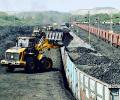
State-owned CIL on Thursday said that it has floated its maiden tender to import 2.416 million tonnes of coal to ensure adequate supply of the fuel to power plants in the country. The development assumes significance in the wake of the government making all efforts to build up stock of coal to avoid the reoccurrence of power outages which happened in April on account of shortage of the fossil fuel. "In a first ever, Coal India Limited (CIL) on Wednesday floated an international competitive bidding e-tender, seeking bids for import of 2.416 million tonnes (MTs) of coal," the company said in a statement.

In the 38-page report, across 10 chapters, RIL explained how it entered the exploration and production business; the history of the New Exploration and Licensing Policy and the introduction of production-sharing contracts.

Union Minister of Road Transport and Highways Nitin Gadkari on Tuesday unveiled the prototype of the world's first Bharat Stage (BS)-VI-compliant electrified flex-fuel car, developed by Toyota Kirloskar Motor. The car, which runs on 100 per cent ethanol (E100), is based on the Toyota Innova HyCross. It can cover 40 per cent of its distance on ethanol and the remaining 60 per cent on electric, with the petrol engine shut off.
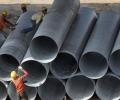
Industrial metals (ferrous and non-ferrous) suffered great volatility once the Ukraine War began in February 2022. First, there was a sharp price rise due to fears of supply disruption, followed by weak global demand. China's weakness and rolling lockdowns have hit production and demand.

Will Empire strike back to prevent a game changing election result, asks T P Sreenivasan.

Dharmendra Pradhan lays bare the next course of action for his ministry and says RIL will have to pay the same price at which it produced the volumes.

India is one of the few countries in the region that enjoys good relations with both Israel and Saudi Arabia, and IMEC would allow it to recreate the old Spice Route to Europe. All this is in jeopardy now, notes Rajeev Srinivasan.

Global rating agency Moody's on Monday said the high commodity prices and supply chain disruptions due to further escalation in the Russia-Ukraine crisis could expose about 42 per cent of rated Indian companies to significant risks. They are mainly in the oil and gas and automotive sectors. The impact may be seen under two scenarios: first, revised base line and second being downside economic scenarios incorporating a global recession and a more severe liquidity squeeze, it said. The military conflict between Russia and Ukraine is impacting companies in Asia Pacific, adding to existing challenges from supply chain disruption and the coronavirus pandemic.
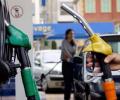
As the world's third-largest oil importer and consumer, India is running out of options as the relentless surge in international oil prices make it imperative to pass them on to consumers, officials said on Monday. India imports 85 per cent of its crude oil needs and about half of its natural gas requirement. While the imported crude oil is turned into fuels such as petrol and diesel, gas is used as CNG in automobiles and fuel in factories.

Lot will depend on the discom's ability to source cheap power and pass on the same to consumer

'In terms of semiconductors, challenges do remain in the pan industry, but I think we are much better than where we were a year or so back.'
.jpg)
By the end of 2020, India will lay 32,737 km across the length and breadth of the country. It needs to lay down and comply with strict safety standards especially since some of these pipes will go through areas of dense habitation, says Rashme Sehgal.
